Books
What I've been reading
Say Nothing
Patrick Radden Keefe
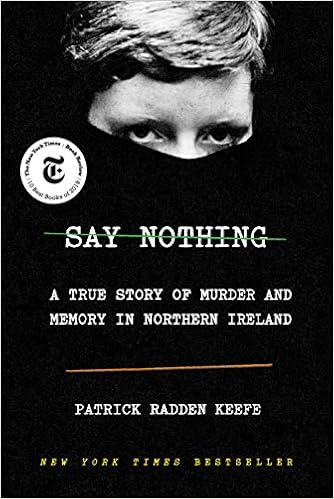
What a book. Patrick Radden Keefe's book focuses on a handful of characters involved in the Troubles in Northern Ireland: in particular, it focuses on Jean McConville, a mother of ten disappeared by the IRA in 1972, and Dolours Price, an IRA soldier. Radden Keefe's aim is to show that the past is both dangerous and close at hand in Northern Ireland. He demonstrates that Gerry Adams, the leader of the Sinn Fein party and hero of the Good Friday Agreement, likely approved McConville's murder. That breathtaking contradiction provokes a lot of questions about justice and what it means to reconcile and achieve peace.
Radden Keefe discusses the work of the journalist Ed Moloney, who wrote a book called The Secret History of the IRA in 2001, and later recorded hours of audio interviews with participants in the Troubles. Called the Belfast Project, it was meant to be a primary historical record of the period to be made available after the deaths of the participants. Remarkably, Radden Keefe never got access to the Belfast Project tapes, even though he had a strong relationship with Moloney. What's remarkable for me is that I read The Secret History of the IRA on a trip to Ireland in 2003 when I was 15; it's very cool to revisit the same issues fifteen years later and see how the history and politics have changed.
December 26, 2019
Play It As It Lays
Joan Didion
Didion's short novel came out in 1970, in between Slouching Toward Bethlehem and The White Album. In those collections of essays (discussed here on this page!), Didion is exploring the alienation of the 1960s. Play It As It Lays is the novelistic treatment of those same ideas. The book centers on Maria, a young actress floating through life in LA. Maria's husband is a top director in Hollywood, and her world is filled with affairs, vicious gossip, drugs, and benders. As with much of Didion's 1960s writing, the book feels very contemporary, treating subjects like homosexuality, drug use, and suicide in a matter-of-fact way that was likely shocking to its audience when it came out.
December 11, 2019
Last Boat Out of Shanghai
Helen Zia
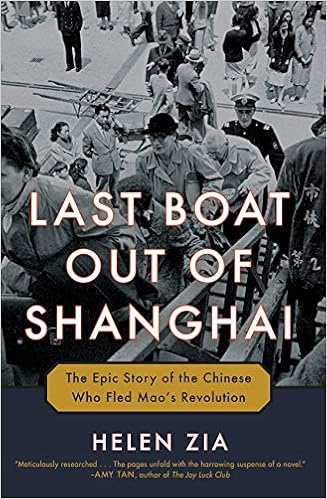
History is taught as a series of settled facts and narratives: the Cold War was an inevitable consquence of World War II; a despot like Napoleon was inevitably going to step in after the chaos of the French Revolution. It is fascinating, then, to visit the seams in history where things didn't look inevitable: 1932 in Germany, 1945 in Yalta or Potsdam, or 1949 in China. Helen Zia's book follows four Chinese people who were swept up in the chaos of the Communist takeover. Her narrative covers some stories that have become stereotypes, like the engineer who wins a study visa to come to the US, but also some less-typical stories, like the boy whose father was a major figure in the Japanese puppet government in Shanghai during the war. While Zia's book doesn't fully explore questions of how people knew when to flee, it paints a vivid and engaging picture of the Chinese diaspora following the revolution.
December 5, 2019
There There
Tommy Orange
Tommy Orange's novel follows a wide cast of Native Americans as they prepare for a powwow in Oakland. Orange paints a vivid picture of the "urban Indian," a group that most Americans would regard as paradoxical and therefore invisible. I found myself thinking back to some of Sherman Alexie's work or to the Inuit film Atanarjuat: The Fast Runner. Alexie was a mentor to Orange, and is thanked in the acknowledgments, but after several #MeToo accusations against Alexie, Orange asked him not to blurb the book. Orange's characters represent a wide variety of Indian experience, from the Alcatraz takeover of 1969-71 to powwow dancing, alcohol abuse, and intergenerational trauma. They're hopeful and misunderstood and sometimes desperate; Orange succeeds at humanizing a community that many readers don't even realize exists.
November 22, 2019
Someone to Love You in All Your Damaged Glory
Raphael Bob-Waksberg
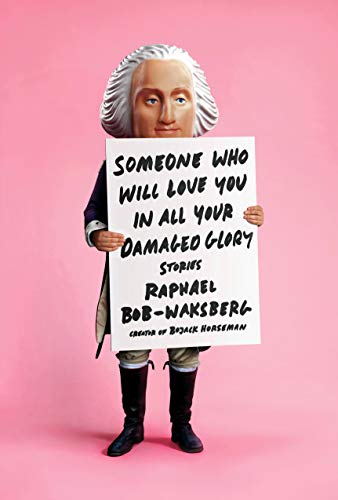
I read this book on a flight to Tokyo, and I'm writing this review on the flight home, just over the International Date Line. Glory is a collection of short stories by the producer of BoJack Horseman, a show I've never seen, but know as an absurdist cartoon for adults. The book is funny in the neurotic mold of Woody Allen or Seinfeld, but aspires to the depth of George Saunders. Some stories feel like writers'-room gags, premises thrown out and built upon by a roomful of clever writers, but then they circle around and you realize you've read a portrait of an entire relationship, and it was never spelled out. The stories can sometimes feel closer to "Shouts and Murmurs" in The New Yorker than The Tenth of December, but still an enjoyable and light read.
November 10, 2019
My Year of Rest and Relaxation
Ottessa Moshfegh
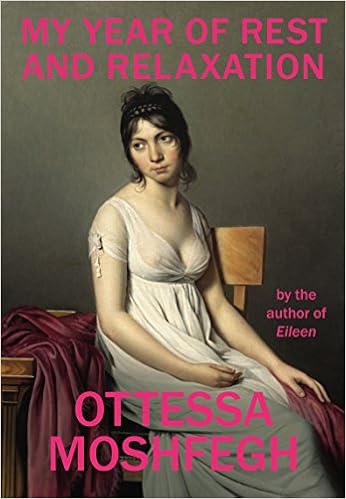
My Year of Rest and Relaxation is a deeply weird exploration of a young woman's attempt to sleep for an entire year. It's 2001, just before the towers fall, and the unnamed narrator is floating in New York—both her parents have died, and she works at an art gallery after graduating from Columbia. She's lost, and approaches the world with a sardonic detachment. She's in a horrible relationship with an older man named Trevor, and has a single friend, Rita, who she treats horribly. Still, you can feel that she's seeking something, and beneath the cool-girl aesthetic is pain. She begins to see a psychiatrist who gives her an astonishing array of sleeping pills, and she embarks on her quest to sleep for a year. Moshfegh's genius is to give us characters who are unsettlingly sympathetic; in a plot where the narrator mostly sleeps, the tension between disgust and empathy propels the novel forward. The book is weird, almost experimental; even if it doesn't work all the time, watching Moshfegh work is fun.
October 25, 2019
The Other Americans
Laila Lalami
This is the second book of Lalami's I have read, and I liked it less than The Moor's Account, which I found startingly creative. Lalami is trying to write The American Novel of 2019; she's got urban artist hipsters and Muslim immigrants and Iraq war vets and resentful white male Trump voters. The book centers on Nora, a composer living in Oakland whose parents are Moroccan immigrants running a restaurant in the Mojave desert. Nora's father is killed in a hit-and-run, and the story unfolds in the aftermath. The pace is quickened by the suspense of the crime, but is otherwise digressive and quotidian. I read the book for a book club, and my friends pointed out that every character has something that "others" them—hence the title. The conceit sort of works, but occasionally flattens characters into their flaws—my friends imagined Lalami managing a spreadsheet of her characters' qualities. Still there's a quiet richness that made the book fun to discuss and fun to recall details with friends. Worth reading, but not at the top of the list.
October 12, 2019
The Right Stuff
Tom Wolfe
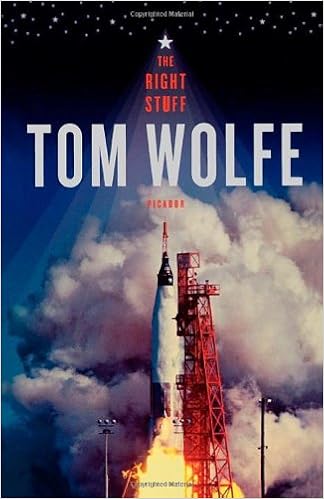
In 2015 the band Public Service Broadcasting released an album called The Race for Space, which tells the story of the Space Race via public domain recordings set to music. The title track sets Kennedy's famous Moon speech to a swelling chorus: the Brahmin accent quoting George Mallory, "because it is theah!" The last year has been full of space-race commemoration after the 50th anniversary of Moon landing, which still boggles the mind—leaving Earth, using completely analog equipment, traveling through space, landing on a different celestial body, and returning, safely. What I have learned in the last year is the tremendous cost of the project. For a time 5% of government spending was going to the space program.
All of which is preamble for Tom Wolfe's delightful history of the Mercury program, The Right Stuff. In the introduction, he's up front that this is a book about heroism and courage, which he points out is deeply out of fashion in military books. The title refers to the pilot's egotistical conviction that there's something innate to a pilot that keeps him calm in a crisis and able to control the wild machines being dreamed up by the US military. Wolfe's discussion of the X-plane program, which for a time was flying higher, faster, and farther than the Mercury program. The first Mercury astronauts were instantly lauded as brave heroes, but spent a lot of time among themselves worrying whether they were true pilots or simply passengers on rockets, no better than a chimpanzee sent up for science. Overall a fun and swashbuckling read.
October 5, 2019
The Overstory
Richard Powers
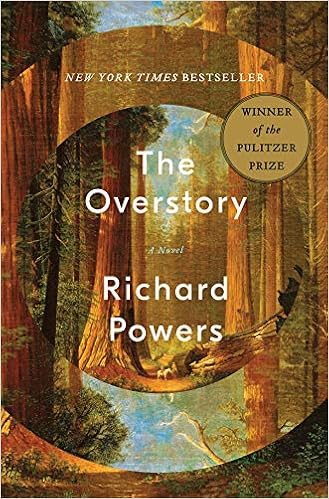
I struggled with this book. Powers writes a series of intertwined stories, where each character has a powerful relationship to trees. The book is really about the trees; the people act on behalf of the trees or through them, and they are constantly having mystical forest experiences. There is some beautiful writing here, but it is overshadowed by a thinly fictionalized account of the last fifty years of environmental radicalism. Powers dramatizes the history of the ELF arson at Vail and the story of Julia "Butterfly" Hill, who lived in a redwood for 738 days in the late '90s to protest logging. Much of that activism is noble and produced significant wins in timber management, but other parts of it indulge in environmentalism's misanthropic streak, which I have a very hard time with. Particularly disturbing is the public suicide of a character who has spent her life studying trees; while I believe that humans should take their place as one species among many, a belief system that leads to suicide as the only path to living harmoniously with nature is deeply wrong.
September 18, 2019
The Goldfinch
Donna Tartt
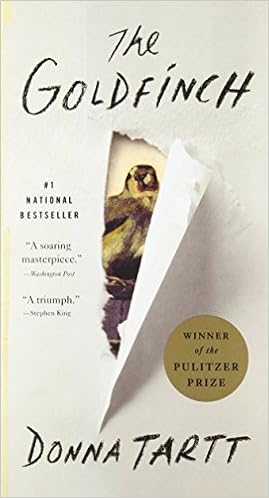
I resisted this book for a few years since I didn't love The Secret History. I was in college at the time, and the book's small-college setting felt too familiar, a symptom of the novelist's tendency to write about writers' workshops and universities. It was a happy surprise, then, when I raced through The Goldfinch. The novel is grand and sweeping; it's set in the present, but could easily be transplanted to the 19th century if you change a few details. The plot centers on Theo, a boy whose mother is killed in a terrorist attack at an art museum and who makes off with a priceless painting. The book meanders through Las Vegas, opioid addiction, and the art world, but throughout maintains confidence in the power of Art to endure and heal. Theo is an ambiguous character: Tartt does a lovely job of blending his mother's saintly qualities with his father's sins into a single compelling character. The book drags sometimes when the plot eddies into a corner and you begin to wonder how Theo will extricate himself, but each section is beautifully written.
September 11, 2019
Eileen
Ottessa Moshfegh
In a recent New Yorker profile, Ottessa Moshfegh describes her time in an MFA program at Brown:
"It’s a lot of mediocrity feeding on itself. So you better be radical, and you better hate everyone. Not that I did personally, but that I had to if I was going to protect the thing in me that I knew I wanted to grow."
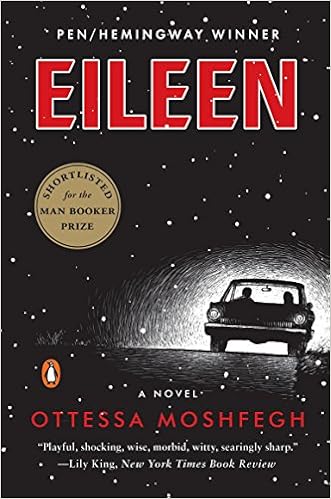
The whole profile is worth a read (her partner comes to interview her for a literary journal and stays for two weeks), but I love the creative prickliness in the quotation. I've been meaning to read her since that article. Eileen is an uncomfortable book. Eileen, the narrator, is looking back at her youth in a dreary New England town (I pictured New Bedford). Her existence is horrible, with an alcoholic and abusive father and a job as a secretary in a prison for boys. The uncomfortable shift comes when you realize you are sympathizing too much with Eileen's sour point of view, and failing to call out the horror of her situation.
August 29, 2019
The Color of Law
Richard Rothstein
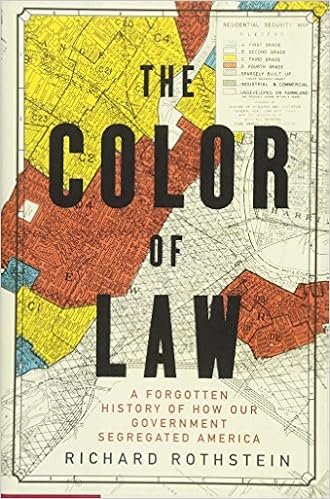
The Color of Law tells the story of government-enforced segregation in America, and it is an eye-opening history. As Rothstein writes, most people think of housing segregation as something that "just happened," created by countless private prejudices or the emergent action of racist real estate agents. Rothstein carefully demonstrates that in fact it was coordinated government policy that created our segregated communities. In particular, the Federal Housing Authority's refusal to guarantee mortgages to Black families locked them out of the postwar housing boom, effectively destroying several generations of wealth creation. As with many things chalked up to market forces, policy plays an outsized role in shaping the market, and behind the policy are very human politics.
August 17, 2019
The Wizard and the Prophet
Charles Mann
Charles Mann's book 1491 started as an article in the Atlantic, which I read as a freshman in high school. It was one of the first long-form articles I read and loved, and kicked off a lot of happy hours in the periodicals section at Loomis Chaffee. More importantly, it was an important corrective to the myth of an "empty" pre-conquest North America. That is a long preamble to say that I admire Mann as an environmental thinker and writer, and The Wizard and the Prophet is a terrific introduction to a central tension in the environmental movement. Mann draws a contrast between "wizards" who believe in technology to solve environmental problems, and "prophets" who believe in coordinated moral or political action. For the wizards, Mann profiles Norman Borlaug, the plant breeder behind the Green Revolution; for the prophets, he profiles William Vogt, a writer and ecologist. Like Mann, I identify with the "wizard" side of the question, and found his writing on Vogt to be less compelling. Still, this book would make an excellent text in an introductory college course, and it taught me some new ideas in a debate I've followed for years.
August 2, 2019
Conversations with Friends
Sally Rooney
A friend lent me Sally Rooney's first novel while I was on a camping trip in Sequoia National Park, and I read most of it one evening while camped at 9,000 feet. It's a better book than Normal People. The book focuses on two friends, Frances and Bobbi, and their slow entanglement with an older, glamorous, married couple, Nick and Melissa. Frances becomes involved with the husband, Nick (who is supposed to be impossibly worldly at 32), and much of the book focuses on the fallout from their affair. There are rich corners of character and relationship that go unexplored, like why the foursome connected in the first place, and what lies beneath Nick and Melissa's marriage.
July 5, 2019
On Earth We're Briefly Gorgeous
Ocean Vuong
Ocean Vuong is a poet, and his debut has the rich precision of poetry. The novel is structured as a letter to his illiterate mother, who emigrated from Vietnam in the aftermath of the Vietnam War. In it, the narrator, known only as Little Dog, describes his life growing up in Hartford, Connecticut, coming to terms with his sexuality, and becoming a writer. The book feels very much like memoir; I found myself thinking back to Educated repeatedly. The book is heartbreaking and beautiful: the narrator describes falling in love with a hardscrabble (and drug-addicted) farmhand named Trevor, abuse at the hands of his mother, and navigating the world as an immigrant. Particularly poignant for me were his descriptions of Hartford, since if the book is memoir, we were rough contemporaries there. I know the "C-Town on New Britain Avenue" that he describes, and the tobacco fields in Windsor, but they were far from my own upbringing. Highly recommended.
July 1, 2019
A Gentleman in Moscow
Amor Towles
I devoured this book in a single sitting on a flight. I initially resisted the book because it feels twee; it's the Grand Budapest Hotel version of Soviet history. And to some degree, that's true — the book glosses over the terrifying purges of the late 1930s and completely ignores the war, which was a cataclysmic event in Soviet history. Works like Lenin's Tomb by David Remnick, or the film The Lives of Others (about the East German Stasi) better capture the desperate claustrophobia and petty absurdism of living under Soviet totalitarianism. Still, there are parts of the book that work well: the way it captures the privilege of the Russian aristocracy (see also: Nabokov's Speak, Memory), the way the life sentence in a hotel resonates with a restrictive society. Overall a fun read.
June 23, 2019
Educated
Tara Westover
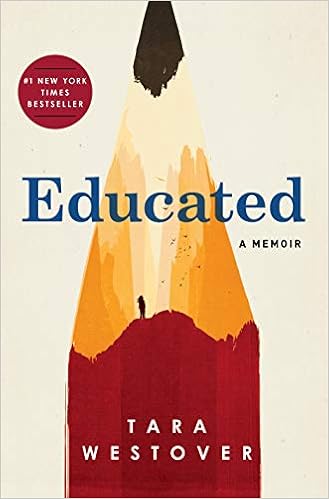
Educated, for those of you living under a rock, is a memoir of growing up in an isolated, survivalist Mormon family in Idaho. Tara Westover winds up as a history professor at Harvard, and her journey is extraordinary. The collision of fundamentalism and untreated mental illness is heartbreaking, as is the enabling of her family. Nothing about Tara's story is simple, but she tells it with an objectivity that makes it all the more forceful. As with any story like this, what she leaves out is equally interesting as what she decides to tell.
June 12, 2019
Normal People
Sally Rooney
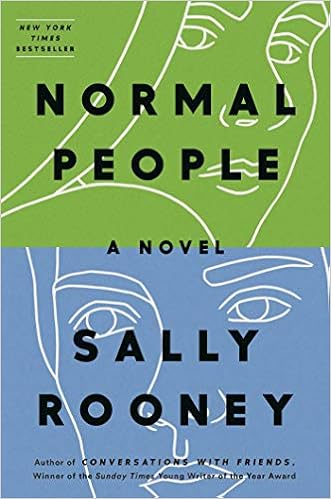
Normal People is the story of Marianne and Connell, two teenagers in Ireland. The book traces their on-again, off-again romance through high school (where the posh Marianne is an outcast) to college (where the working-class Connell struggles to fit in). The first third of the book is arrestingly beautiful and surprising — Rooney has some lyrical passages about teenage love and social hierarchies. Unfortunately it's hard to figure out why they can't just decided to be together; the novel then bogs down with lots of angst and self-doubt.
June 9, 2019
The Broom of the System
David Foster Wallace
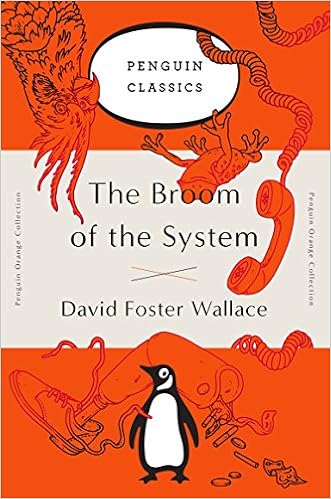
I bought this book at Shakespeare and Company in Paris while on a business trip; it felt fitting. David Foster Wallace wrote The Broom of the System while he was still at Amherst, and it was published when he was only 24. A later review described it as "like watching an 8-year old play Vivaldi with tears streaming down her face: beautiful, but a little disturbing." I've now read all of Wallace's novels (the others being Infinite Jest and The Pale King, finished after his death), and I used to say that I preferred his nonfiction, since at least he was tethered to the facts. In his fiction, his neurotic imagination really gets going. I think that was a glib take; one thing that struck me about Broom is how many of the themes and ideas would continue to pop up in both Infinite Jest and Pale King. Language, entertainment, the absurdity of modern work, boredom; you can see him wrestling with these ideas throughout his career. Broom is less mature than his later works, but it's also more exuberant. His references to Wittgenstein are pretentious, sure, but they're fun — this is a writer figuring out his powers.
May 30, 2019
The Mars Room
Rachel Kushner
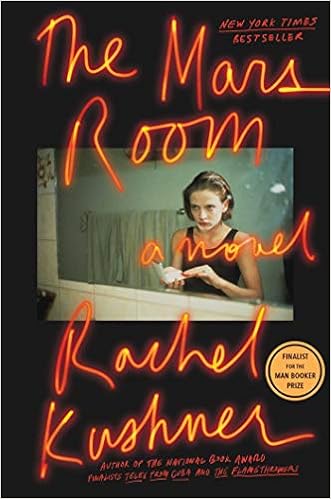
The Mars Room is a book that sneaks up on you. It's the story of Romy Hall, a young woman entering prison for a life sentence for murder. Kushner grew up in San Francisco and spent months visiting a women's prison in California, and her affinity for both the state and the women she writes about is clear. There's a clarity to Kushner's writing that pulls you in and makes her characters deeply sympathetic. It's like she's researched so thoroughly that you stop noticing the research. The book has echoes of Orange is the New Black, but Mars Room is darker; the book can be funny, but doesn't make prison seem like an innocent ground for hijinks. Some of the book's most powerful moments are when Romy feels the existential despair of prison life, the way it completely robs a person of agency. After reading this and The Flamethrowers, I revisited The New Yorker's profile of Kushner, and found that it helped me understand her work even more fully. Telex from Cuba is on the list!
May 16, 2019
Sea People
Christina Thompson
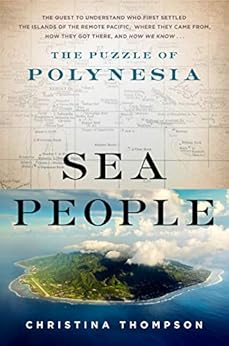
I had finished half of this book before diving into The Great Believers, so I didn't actually read it in two days. Christina Thompson's history of the settlement of Polynesia is an engaging and evenhanded look at the very puzzling historical question of exactly how the tiny and farflung islands of Polynesia came to be settled. She discusses James Cook's 18th century voyages and the remarkable Tahitian navigator Tupaia; racist theories about how Polynesians were actually Indo-European; and the archaeological evidence that enables us now to date waves of migration with relative precision. My favorite section, unsurprisingly, was her account of the so-called voyaging movement, of which David Lewis's We, The Navigators (see below) was an early and critical part. Still, it was helpful to put his work in context and learn more about the cultural significance of the movement to Hawaiians and its rocky history, including the loss of Eddie Aikau after the capsize of the canoe Hokule'a in 1980. I loved reading about the early computer simulation work done at the University of London that proved that the voyages could not have happened by drifting alone. Ultimately a fun, if somewhat light, survey of Pacific history. It made me want to get in a boat and go exploring.
May 13, 2019
The Great Believers
Rebecca Makkai
Whew I loved this book. The best novels are both gripping and literary, and Believers is solidly in that category. The plot centers around Chicago's Boystown gay scene in the early years of the AIDS epidemic, and flips back and forth between the 1980s and 2015. A few years ago I read a lot about the AIDS epidemic—Randy Shilts'And The Band Played On; David France's documentary How to Survive a Plague—and it is strangely fascinating to read about events that just barely preceded your own lifetime and thus historical consciousness. The book focuses on a young woman named Fiona, who has recently lost her brother to AIDS, and her brother's friends, who are mourning him while losing one another to the epidemic. One of the book's narrators is a young gay man named Yale Tishman, and part of the power of the novel is how it puts you in his shoes, and makes you feel the terror and anger and shame and confusion of that time. In a wonderful subplot, Yale discovers a trove of WWI-era art, and Makkai makes the connection between the nihilist destruction of the war and the ruthlessness of AIDS; how they both destroyed and galvanized the creative community. Highly recommended.
May 11, 2019
House of the Spirits
Isabel Allende
For years, I counted One Hundred Years of Solitude as my favorite novel. I've read it twice, and probably am overdue for a re-read. I loved its grand sweep, its romance, and its use of myth to heighten its meaning. There are deep similarities between the two books, and I was a bit disappointed to learn that House of the Spirits was published in 1982, a full 15 years after Solitude. Still, there is enough richness here to recommend the book on its own. The women of the clan are the lifeblood of the book. Their clairvoyance, loyalty, and political righteousness animate the plot. Their masculine foil, Esteban Trueba, the patriarch of the clan, is a particularly complex character; he remains sympathetic even when his violence and mistreatment of everyone he loves has brought disaster on his family and his country. Beyond the characters, the plot is drawn from contemporary Chilean history. There is a famous poet who lives in a shiplike house on the coast, and a violent rebellion that leads to the death of a principled but ineffective President. Isabel Allende is the niece of Salvador Allende, and the plot coils and crumples toward the end after a languorous journey through the generations.
April 23, 2019
Black Leopard, Red Wolf
Marlon James
In a review of Black Leopard, Red Wolf for NPR, Amal El-Mohtar writes,
Reading Black Leopard, Red Wolf was like being slowly eaten by a bear, one inviting me to feel every pressure of tooth and claw tearing into me, asking me to contemplate the intimacy of violation and occasionally cracking a joke.
The book is extraordinarily violent, and proceeds with the same dizzying density as James' A Brief History of Seven Killings. In a recent profile in The New Yorker, Jia Tolentino explored James' struggle to embrace his homosexuality in spite of a conservative religious upbringing in Jamaica, as well as his interest in African history and myth. Both strands are present in the book, with the mythical geography loosely based on historical African cultures and a lot of violent sexual imagery. Although I am interested in his Afrocentric take on fantasy and enjoyed some of the mythological elements of the book, overall I found the book hard to read.
April 16, 2019
The Flamethrowers
Rachel Kushner
I finally got around to reading Rachel Kushner! And what a novel. The Flamethrowers centers around Reno, a young artist swept up into the chaos of 1970s New York. Reno is a wonderful, complex character, a three-dimensional woman who is ordinary enough to be believable. She falls into a relationship with Sandro Valera, the scion of a powerful Italian industrial family, and ends up in a spectacular crash while speed testing a Valera motorcycle on the Bonneville Salt Flats. Kushner references Italian Futurism and Land Art and the 1977 blackout; somehow all of these strands weave together into a rich and complex novel.
March 10, 2019
Reinventing Bach
Paul Elie
One of the perks of my apartment is that my upstairs neighbor is a cellist; I can hear her practicing as I write. It is a fact of my life that I am much more talented at being interested in art than I am at actually making it, and so after she and I discussed Bach one day, she recommended this book. To my surprise, Elie focuses on recordings of Bach, particularly those by Albert Schweitzer, Pablo Casals, and Glenn Gould. The remarkable thing is that Spotify has many of the recordings mentioned in the book, so I would listen to Schweitzer's early 1935 recording of Bach's Toccatas, made in a 900-year-old church in London on the eve of the Second World War. Elie's descriptions made the listening experience much richer because I could hear what Schweitzer was putting into his playing. He describes how Gould made the recording studio an instrument, and how Casals used music to lodge a decades-long personal protest against the Franco regime in Spain. I have also been listening to several music podcasts ("Switched on Pop" and "Song Exploder," particularly), and what I love is the way music combines engineering with art, analysis with creativity. An A is 440 Hz, but that doesn't explain why we feel something when we listen to Bach's Chaccone. The book is less successful in its biographical treatment of Bach's life, but worth it for its explanation of some beloved recordings.
February 18, 2019
Speak, Memory
Vladimir Nabokov
Speak, Memory is Nabokov's autobiography. It covers the years between his earliest memories in 1903 (he was born in 1899) through his departure for the US in 1940. I find Nabokov endlessly fascinating: English was his third language after Russian and French; his long, rambling road trips with Vera through the US in the '50s; his obsession with butterflies. The pleasures of Speak, Memory are twofold: first, the historical interest of a life lived across the cataclysms of the 20th century, and second, the astonishingly beautiful writing. Nabokov's family was prominent, as his father and grandfather served in the Tsar's government. They lived in mansions in St. Petersburg and decamped for a country estate in the summers. In many ways, prerevolutionary Russia was still feudal, and Nabokov's family was on the right side of society. It is poignant to consider how wrenching modernity would be for Russia— with progress would come unimaginable horror.
As an aside, Nabokov's vocabulary is immense. Below are the words I scribbled into the frontispiece and looked up later:
palpebral: adj, relating to the eyelids
fatidic: adj, of or relating to prophecy
blackamoor: n, a black person
frass: n, fine powdery refuse or fragile perforated wood produced by the activity of boring insects
aquarelle: a style of painting using thin, typically transparent, watercolors
xanthic: adj, yellow
ecchymotic: adj, bruised
enuretic: adj, relating to wetting the bed
refulgent: adj, shining brightly
nictitating: v, blinking
quiddity: n, the inherent essence of someone or something
purblind: adj, having impaired or defective vision; dimwitted
nankeens: n, a yellowish cotton cloth; pants made of nankeen
cacologist: n, one who has a bad choice of words or poor pronunciation
zoolatry: n, the worship of animals
shantung: n, a dress fabric spun from tussore silk with random irregularities in the surface texture
oasal: adj, of or relating to an oasis
chamfrained: adj, wearing the head armor of a horse
persiflage: n, light and slightly contemptuous mockery or banter
inanition: n, exhaustion caused by lack of nourishment
drisk: n, a drizzly mist
January 20, 2019
The Better Angels of Our Nature
Steven Pinker
Occasionally, usually without intending to, my reading takes on themes. A few years ago there was a series of novels that took on race in America; another time it was the War on Terror. The last few books I've read have been about the human capacity for cruelty. Pinker's book is the broadest of them all. His project is to show that over the last two thousand years, violence has declined precipitously. The first half of the book is an exhaustive sociological survey of death rates by violence (expressed per 100,000 people) and an exploration of the forces that have made that rate go down. The second half is a psychological and evolutionary exploration of humanity and how we are capable of both cruelty and grace. I appreciate Pinker's rigorous style; he stays close to the data and debunks many of the sillier claims about human nature. Pinker is an Englightenment liberal, in the classical sense, and he explains the various strains of Enlightenment and counter-Enlightenment thought in a clear and cogent way. The book is rich and fascinating and is a feast for further thought: the roots of the Holocaust, the surprising uptick of violence in the peace-and-love '60s, and the statistical likelihood of a third World War. If there's a gap in the book, it's about European colonization — while the violence was more indirect (famines instead of wars), it still killed an enormous number of people. Overall, eye-opening and rigorous, and fundamentally optimistic.
January 2, 2019