Books
What I've been reading
Bury the Chains
Adam Hochschild
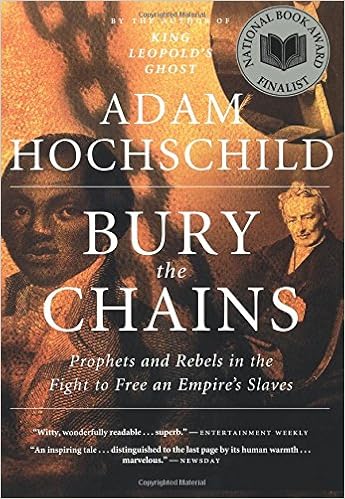
Hochschild is one of my favorite writers; this is the fifth book of his I've read. He's a classic human-rights liberal — he was a founder of Mother Jones, and his histories focus on popular movements like anticolonialism (King Leopold's Ghost), resistance to the First World War (To End All Wars), and resistance to Fascism ( Spain in Our Hearts). Bury the Chains is solidly in that vein as the story of the British movement to end the slave trade in the late 18th and early 19th centuries. Hochschild paints a vivid portrait of the contradictions of Enlightenment England. It was a deeply religious era, but one making great advancements in science. It was a time of cruel punishments and harsh working conditions, but also of cosmopolitanism and expanding literacy which led to more humane perspectives. The heroes of Hochschild's narrative are a small group of Quakers, Anglican clergy, and politicians who carefully documented the atrocities of the slave trade and brilliantly activated popular resistance, including now-familiar tactics like boycotts, petitions, and direct mail. The way they moved public (and political) opinion from slavery as a distasteful but inevitable fact of life to an unacceptable moral outrage is an inspiring lesson.
December 23, 2018
The Making of the Atomic Bomb
Richard Rhodes
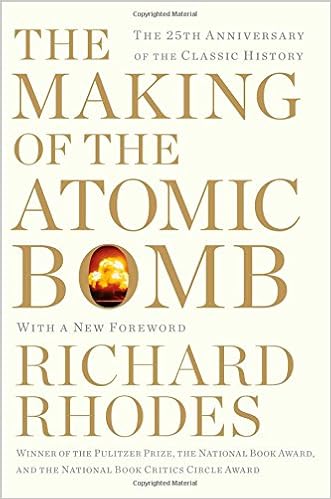
Rhodes' book opens with the Hungarian physicist Leo Szilard stepping off a London curb and having a vision — inspired by an HG Wells novel — of atomic weapons. The book then traces the thirty-year project of theoretical insight, painstaking experimental research, and finally military-industrial achievement that produced the bombs dropped on Hiroshima and Nagasaki. As I read the history I reflected on three ideas: first, that the race to build the bomb was the last time that science was seen as "Progress" and as an unalloyed good. The aftermath of WWII and the recognition of what industrial "Progress" had wrought — from the Holocaust to the bomb — would rightly give rise to political critiques of industrialism, as in the environmental movement. The second idea is the aesthetic of the "atomic age," with its mushroom clouds and control rooms. Rhodes' description of the first Trinity test, held only three weeks before Hiroshima, is extraordinary for its otherworldliness. Finally, I was struck by the prescience of purpose and pace of development. The physics community knew they could build a bomb almost as soon as the war started. Most of the work was scaling up industrial processes; they went from isolating a few micrograms of plutonium in 1943 to creating several pounds of it for a bomb in 1945.
December 15, 2018
The Shell Collector
Anthony Doerr
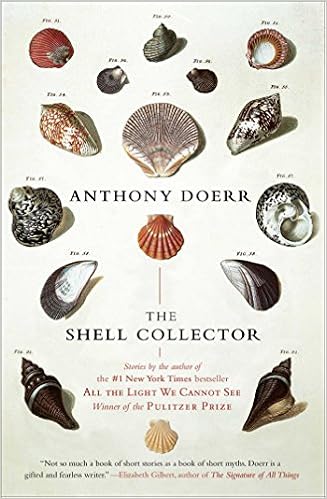
Doerr is rightfully famous for his novel All the Light We Cannot See, and this remarkable collection runs over similar concerns as the novel. Doerr's characters have rich internal lives, vivid relationships with nature, and often, some characteristic that holds them apart from the world. The first two stories in the collection are some of the best I've ever read — in particular the title story, about a blind shell collector who inadvertently discovers a miracle cure in a toxic snail, and in "The Hunter's Wife," about a taciturn Montana hunter and the mystical powers of his wife. Highly recommended.
November 25, 2018
The Thousand Autumns of Jacob de Zoet
David Mitchell
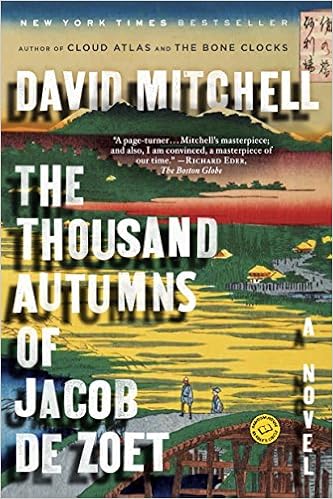
Thousand Autumns is the third Mitchell novel I've read, after Bone Clocks and Cloud Atlas. It has a similar ambitious sweep as the previous books, but is more grounded and less sci-fi. Cloud Atlas remains my favorite of his work, but I enjoyed this book quite a bit. The story takes place in the late 18th century in a Dutch trading outpost just off the coast of Nagasaki. The title character is a decent and ambitious young Dutchman who has traveled to "the East" to seek his fortune and earn enough to marry in the Netherlands. He gets tangled in a complex story of corruption, imperial geopolitics, and the internal politics of Japan during the Shogunate. Japan was famously hostile to outsiders until it was forcibly opened to trade in 1854, and Mitchell does a serviceable job of writing about Japanese characters and their culture during that era.
November 22, 2018
The Clock of the Long Now: Time and Responsibility
Stuart Brand
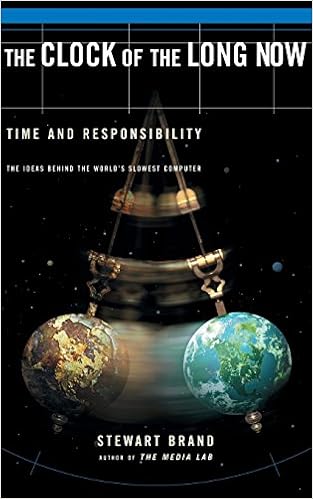
I've wanted to read Stuart Brand for a while now, but never got around to it. He has a very Northern-California sensibility as a thinker, since he's a futurist and a technologist as well as an environmentalist. That separates him from some others in the environmental movement, who see technology as primarily a threat to the natural world. The book was published in 1999, right at the height of hype about "the Net," and the book is littered with references to dot-com era figures like Jaron Lanier and Brewster Kahle. The book is a series of meditations on what it means to hold a very long perspective — Brand suggests 10,000 years. It's an elegant way to force ourselves to consider both stewardship of resources and the folly of many of our pursuits. One of the most useful ideas in the book is a diagram showing the relative rates of change of societal forces: Fashion changes most quickly, followed by Commerce, Infrastructure, Governance, and finally, Nature.
November 19, 2018
Outline
Rachel Cusk
I bought this novel thinking it was by Rachel Kushner, not Rachel Cusk. I'd read a profile of Kushner and was interested in her work, but so it goes. My misunderstanding made Outline more interesting, especially after the fact; I had to recalibrate my understanding of the book. The novel is quiet and intelligent, the kind of book you're not completely sure you've grasped after the first read-through. The narrator, a novelist, is unnamed, and she reveals herself to us only through the reflection of her conversations. In that way, the title functions on a few levels: we see the narrator faintly, as in a visual outline, and we see only the outline of her story, as if it is an unfinished novel.
November 10, 2018
Barkskins
Annie Proulx
A 700 page novel about the magisterial sweep of the colonization of North America and its ecological legacy? Yes please. The book traces two French indentured servants who wind up in New France in the 1600s, following their descendants all the way into the 21st century. It weaves together ecological and political history; I found myself thinking often of Bill Cronon's Changes in the Land or Nature's Metropolis. My only disappointment was that by the end we were racing through generations, but overall a fun and broad read.
October 8, 2018
Never Lost Again
Bill Kilday
Another book about maps! The genesis of Google maps came from two startups acquired by Google: a team of 30 called Keyhole, that built what we know as Google Earth, and another, called Where2Technologies, which had only four people and contributed some of the core technology for the smooth, fast "slippy" maps we use today. Kilday was the head of marketing at Keyhole, and his biases, toward his original team and to marketing, are evident. Still, it's an eye-opening look at how recent digital mapping technology is. Some of the product decisions they made then, like being inspired by the Eames film Powers of Ten, still shape how we view maps on the web today. Google made the acquisitions after seeing that 25% of web searches had a geographical component; location matters!
September 30, 2018
A Widow for One Year
John Irving

It's been a few years since I've read an Irving novel, and it was fun to come back. The story revolves around grief, sex, infidelity, and a spectacularly dysfunctional family, but manages to be warm and funny at the same time. Ruth, the daughter, is an especially three-dimensional character, and the way the story plays out across the generations is satisfying.
September 28, 2018
The White Album
Joan Didion

The White Album's title essay famously opens "We tell ourselves stories in order to live," and this volume is Didion's second attempt to make sense of the Sixties. Published in 1979, it's the followup to Slouching Toward Bethlehem, and overall the book is looser; there's less of a sense of mission to what she's trying to say. "The White Album," the essay, details a psychiatric episode, and you get the sense that her own crackup mirrors the country's. Her essays about feminism are nuanced and arch, and her treatment of California adds depth to a place that often feels quite shallow, historically.
August 26, 2018
My Struggle: Book 5
Karl Ove Knausgaard
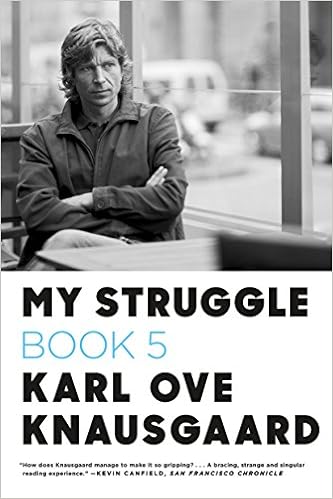
Book 5, subtitled "Some Rain Must Fall," felt different than the rest of the My Struggle series. It's more novelistic and less automatic; the book is more of a traditional narrative than the tight, intensely felt vignettes of the earlier books, and the pacing dragged more than the others. Perhaps that's intentional — it covers a long period of creative frustration, self-destruction, and self-doubt in Karl Ove's life. There are parts of the book that are almost frightening, like when he hurls a glass at his brother in a drunken rage or cuts himself soon after meeting a woman he would later marry. Still, you root for him. I was surprised to find out that I've caught up: Book 6 will be released in late September, and weighs in at a staggering 1200 pages.
August 19, 2018
Scale
Geoffrey West
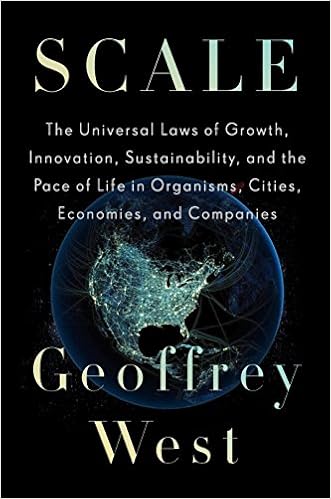
Every once in a while, a nonfiction book comes around that turns my thinking upside down, and I'll be adding Scale to the list (Others include Guns, Germs, and Steel by Jared Diamond and The Information by James Gleick). West is a physicist, and he uses the theoretical tools of physics to look at biological and human systems. The core idea of the book is that universal physical laws emerge from the ruthless optimization of evolution, which gives us predictive power. For example, every mammal gets about 1.5 billion heartbeats; a mouse just churns through them much faster than an elephant. Further, there's a literal economy of scale for the elephant — its cells sustain much less damage than high-intensity mouse cells, and so it lives much longer. The book is full of cool insights, like the fact that if you could bundle up every leaf stem on a tree, the area of the bundle would equal the cross-sectional area of the tree trunk. The later chapters, about companies and cities, are a bit more speculative, but suggest an ecology of human systems that could be incredibly powerful.
August 10, 2018
My Struggle: Book 4
Karl Ove Knausgaard
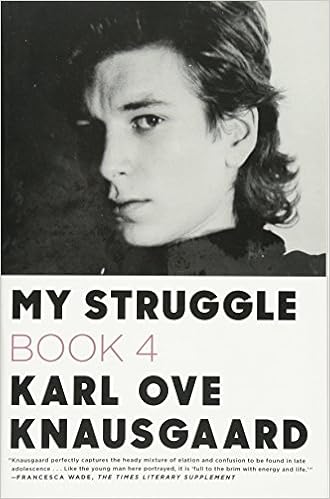
A lot of the critical discussion of My Struggle centers on how quotidian it is; the series is usually described as "both tedious and gripping." The description implies that the book is a diary, or an exhaustive account of Knausgaard's days, which isn't quite right. Each volume centers on a discrete period in his life, and on a discrete and illustrative set of events within that period. There's a substantial amount of artistry and storytelling to create the combination of "tedious and gripping." Volume 4 recounts Knausgaard's year as a teacher in a small town in northern Norway. He learns how to be an adult and furiously trying to become a writer. The mistakes of early adulthood are grand and painful, and he's no exception. It's cathartic to relive them through his writing.
July 28, 2018
My Struggle: Book 3
Karl Ove Knausgaard
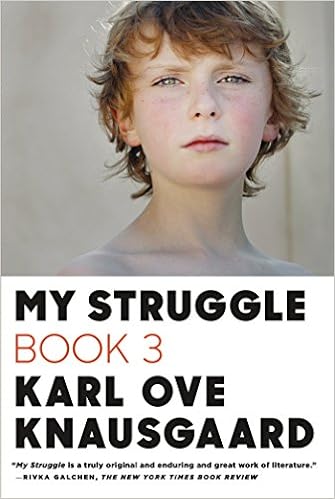
Book 3 of the My Struggle series, subtitled "Boyhood," is set across Karl Ove's childhood. There's less self-awareness; kids don't know a lot, and he captures what it feels like to slowly learn more about the world. He learns about girls, and sports, and mischief, and social taboos. One of my favorite works about childhood is Where the Wild Things Are — something both the book and the movie get right is the volatility of being a kid. While "Boyhood" is much less whimsical, it put me right back into the drama of growing up. Book 4 is on order.
July 6, 2018
Prisoners of Geography
Tim Marshall
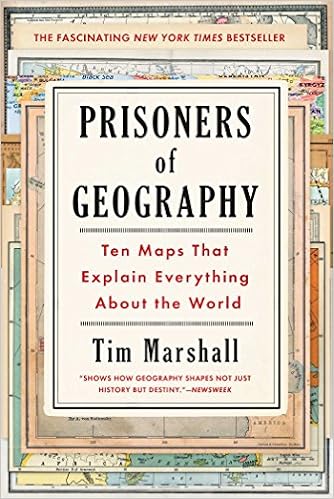
I'm sorry to say that this book is not very good. It seemed promising: a bestseller focused on geography and maps, that uses the natural world to explain geopolitics. Unfortunately it was superficial and light, and in each chapter I found myself thinking back to other books that took on the similar material in much greater and more interesting depth.
June 24, 2018
My Struggle: Book 2
Karl Ove Knausgaard
Well, I think I'm hooked. The second volume is subtitled A Man in Love and with any of Knausgaard's titles, there's irony: the book focuses mostly on the tensions and contradictions of being a middle-aged parent rather than the rush of romance. Children are both maddening and meaningful; he explores both the power of the experience and the toll it puts on his career and on his marriage.
June 22, 2018
My Struggle: Book 1
Karl Ove Knausgaard
I've been curious about My Struggle for a few years, but always felt too daunted to dig in. The weirdly Hitlerian title, the Scandinavian seriousness, and the prospect of embarking on a 3,600 page autobiographical project made it hard to start. The books are often tedious, but still gripping; the power comes from a sense of identification with his inner monologue. Knausgaard manages to capture what it feels like to be a thinker and an observer of your own life.
June 5, 2018
Purity
Jonathan Franzen
I was not terribly impressed with Purity. It's a fast read, and fun and suspenseful at times, but I kept wondering if it would attract attention if not written by Franzen. The plot centers around a plucky young woman (the eponymous Purity, aka Pip) who gets involved with a mysterious transparency organization similar to Wikileaks. The book is supposedly centered around Pip, but ends up examining a complicated relationship between men, and the book's female characters felt incidental and light.
May 8, 2018
Native Son
Richard Wright
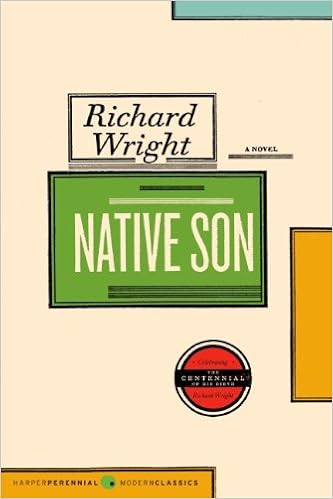
Native Son was sitting on a free paperback cart as I boarded my flight from Boston to San Francisco last week, and I read it on my flight home. The novel directly takes on the claustrophobic feeling of being an urban black man in the 20th century in a way that I found surprising compared to other books of the era, and I found myself reading the book for its politics more than its literature.
May 1, 2018
Oblivion
David Foster Wallace
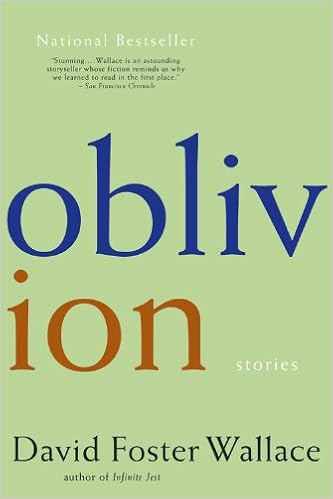
This book made me sad. David Foster Wallace is one of my favorite writers, but I've neglected his short stories (still to read: The Broom of the System and Brief Interviews with Hideous Men). Oblivion was published in 2004, only a few years before he killed himself in 2008. The stories have his usual frenetic pace and vocabulary, but where that pace feels fresh and intelligent in his other work, it's harder to see its purpose here. There are the typical themes of bureaucratic ennui and meaninglessness, but the stories are somehow sadder and less compassionate to their hapless characters.
April 30, 2018
White Tears
Hari Kunzru
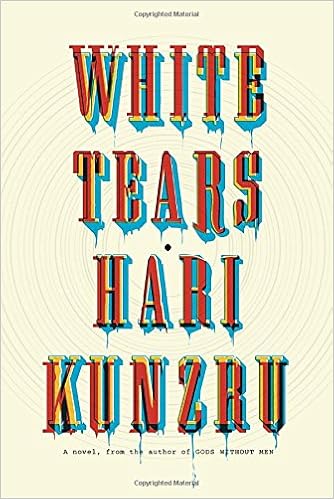
White Tears is a novel about race and music, and I devoured it in an evening. Two young men start a record label devoted to unearthing old Black music, and they discover some very dark realities. It's a gripping thriller (in fact tips into horror, at points), but is ultimately light on historical resonance, mostly because its black characters are thin caricatures, or villains. The book owes a lot to Invisible Man; I found myself thinking back to high school, when I discovered Louis Armstrong's "Black and Blue".
April 27, 2018
Footsteps
Various Authors
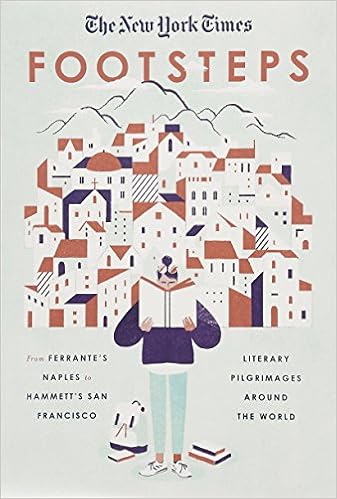
Footsteps is an anthology of New York Times articles that trace the footsteps of famous authors. Abbey gave me the book for my birthday. I'd never read the feature in the paper, but I loved this book. I learned things about authors I knew very little about: Rimbaud never wrote poetry after age 21, died at 37, and lived for a long time in Ethiopia. Who knew! I read the book on a business trip to Berlin and learned that Isherwood lived near the office; I hadn't known that Mark Twain had written about Hawaii for the Sacramento Union. Each piece has a unique angle, so they never get repetitive. It's a rare book that manages to be intellectually stimulating yet still light.
March 10, 2018
Embracing Defeat
John W. Dower
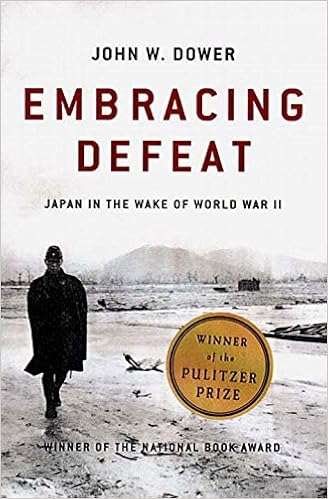
Embracing Defeat focuses on the years of American occupation, from 1945-1952, and examines fascinating questions of societal transformation, moral responsibility for catastrophe, and hard compromises for the victors following capitulation. For every radical decision (disbanding the zaibatsu, writing pacifism into the Constitution), there were equally conservative decisions (retaining the Emperor, most conspicuously). The interaction of the Japanese response to defeat and American policy choices forged modern Japan, and the book is an indispensable guide to the period.
February 1, 2018