Books
What I've been reading
We, The Navigators
David Lewis
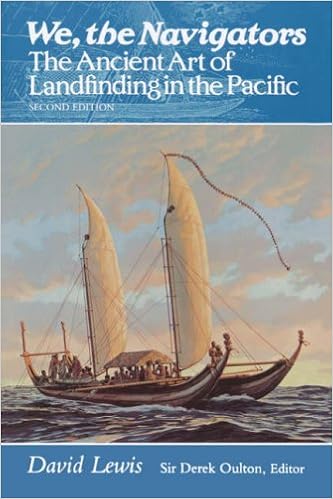
David Lewis spent 5 years in Polynesia learning from the last of the traditional navigators, and he collects his research in this tremendous monograph, now in its second edition. It's an academic book, so can be a bit dry at times, but his methodical approach is welcome for its comprehensiveness. While Western navigators (before GPS) would attempt a sun sight once a day, and then fix their position on a static map, for the Polynesians, navigation was a continual process of integrating observed data into a picture of their location. And what a rich set of data it was! There's the "sidereal compass," or the position of stars on the horizon as they rise; navigating by judging the refraction of swell around islands in order to expand the "landfall target"; learning the homing behavior of birds 20 miles offshore; or most remarkably, using deep-sea phosphorescence to detect islands up to 80 miles away. Reading Lewis's account of his voyages made me want to go offshore in the South Pacific or at least become a much closer observer of natural phenomena in my backyard.
December 16, 2017
Pinpoint
Greg Milner
This is a fun book, and not just because I have a professional interest in GPS technology. It's an engaging history and an approachable but sophisticated technology explainer. The history of GPS winds throught the Cold War, the "smart bombs" of the Gulf War, and finally exploded into civilian applications in the late '90s. Milner dives into a number of fascinating side-subjects, from Inuit navigation in the far north to how GPS turn-by-turn changes our minds to geodesy, or the study of the shape of the Earth.
December 9, 2017
Fates and Furies
Kate Groff
Fates and Furies lives up to its title. One reviewer described Groff as "writing as if her hands are on fire" and the book's twisty plot reminded me of Gone Girl. There are some thin spots, particularly in the extremes of the characters: cartoonish villainy, unlimited money, unlimited charm, unlimited anger. But overall a fun, literate, and fast-paced read which offers some complex thoughts on marriage and art.
November 25, 2017
Moonglow
Michael Chabon
Michael Chabon's characters are usually bright, and loud: the superheroes of The Adventures of Kavalier and Klay or the Jews at the end of the world in The Yiddish Policeman's Union. In Moonglow, he's still dealing with his themes of Judaism, literature, and complex families, but the book is much quieter. The book is a fictionalized account of conversations with the narrator's grandfather; the narrator is also named Michael Chabon, and the book is propulsive but not suspenseful. It's a novel, with a novel's elegant plotlines, but retains the circumstantial revelations of memoir.
October 11, 2017
Slouching Toward Bethlehem
Joan Didion
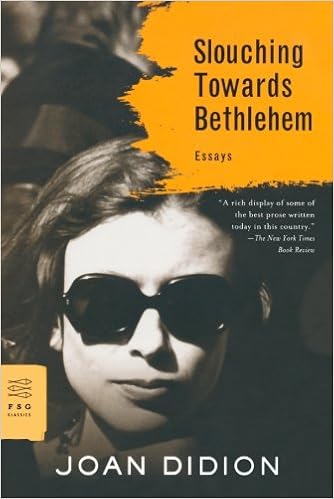
Didion's book of essays is billed as an examination of "the atomization of modern life." All the essays in the book were written between 1961 and 1967, and reading them now is both an exercise in history—since she is writing for a contemporary audience—and in reflection, since in many ways it feels like "the center cannot hold" in 2017 America. My favorite essays are the title essay, about the hippies of the Haight, and "On Keeping a Notebook," which is about what it means to observe the world as a writer.
September 23, 2017
News of the World
Paulette Giles
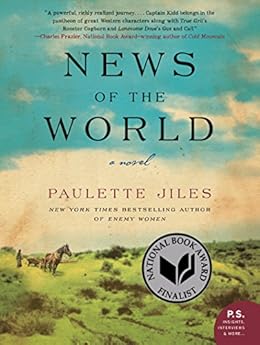
A light, lovely Western. Set in Texas in the 1870s, it tells the story of an old man returning a girl, recently recovered from captivity by the Kiowas, to her family. Not nearly as gritty as Lonesome Dove; it manages to be sentimental without cloying.
September 18, 2017
The Caine Mutiny
Herman Wouk
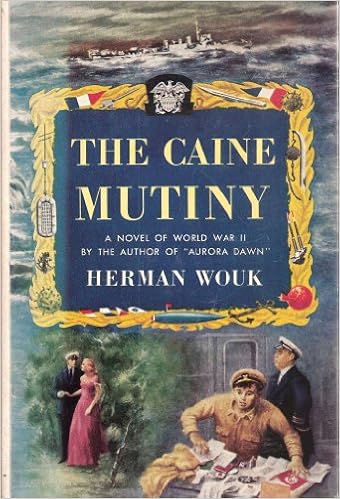
A classic World War II novel that won the Pulitzer Prize in 1952. The book celebrates old-school virtue, but retains just enough ambivalence about war to be interesting. Many passages about the terrible leadership of Captain Queeg reminded me of Trump, in that cultivating loyalty and good faith is much more likely to yield results than mean-spirited tantrums.
September 11, 2017
A Brief History of Seven Killings
Marlon James
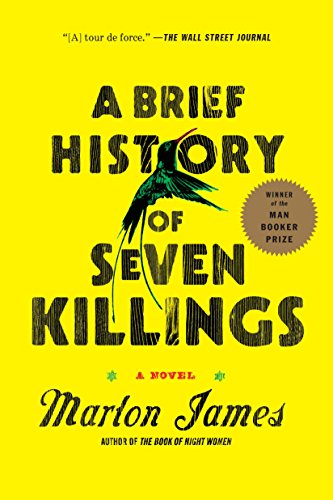
A Brief History tells a winding and fragmented story, loosely centered around the 1976 shooting of Bob Marley in his home in Jamaica. The book is violent and hard to follow, with multiple narrators speaking in multiple dialects, but I learned a lot about Jamaica in the '70s. The book won the Man Booker prize in 2015, beating out a strong shortlist, including Hanya Yanigihara's A Little Life (which I have read) and Sunjeev Suhota's Year of the Runaways (which I have not).
September 6, 2017